History

History

History at St Dominic’s College offers an understanding of human activities in the past in the context of change through time. It enables students to understand their heritage and that of their community, society and nation. History challenges students to think about continuity and change, similarities and differences and cause and effect. In this process students also learn that truth is difficult to establish and that personal judgments and opinions should be supported by firm evidence and coherent argument.

History is offered to students from Yr 11 to Yr 13 and consists of both internal and external assessments at NCEA levels.

Level 1

New Zealand Search For Security 1945- 1985
Through this topic you will study:

  • New Zealand’s post-war search for security. Involvement in international and continental peace efforts.
  • Involvement in Pacific and Asia. New Zealand’s relationships with Pacific nations and military involvement in Asian territories.
  • Controversial issues of the 1970’s and the 1980’s. Opposition to nuclear testing, and the role of peace groups.

The origins of World War 2 1919-1941
Through this topic you will study:

  • Post WW1; the Treaty of Versailles. Attempts at collective security.
  • Fascism and aggression: military pacts: Rome-Berlin-Tokyo Axis, German-Soviet Non Aggression Pact; Asia and the Pacific: Japanese objectives in Manchuria, China.
  • The failure of appeasement in the face of aggression. Rationale of appeasement: Anschluss and Czechoslovakia. War in Europe and the Pacific.


Black Civil Rights in the USA 1954-1970
Through this topic you will study:

  • The oppression of Blacks in America, socially, economically and legally.
  • The beginnings of the Civil Rights movement; Rosa Parks, National Association for the advancement of Coloured People, Federal responses and the role of the Supreme Court.
  • The concept of non-violence; Martin Luther King and the influence of Ghandi.
  • The growth of militant action; urban riots of the mid-1960’s. Separatists: Malcolm X, Muhammad Ali, the Black Muslims, Panthers, Angela Davis.
  • Extent of change since 1954.

mlk.bmp

 Apart Hate.jpg

Level 2

Revolution in Russia.
Through this topic you will study:

  • Russia under the last Tsar, Tsar Nicholas II. This will include Russians revolutionary movements, the economic change, constitutional and social structure, the Duma and the impact of World War One.
  • Revolutions of 1917 and the result of the civil war, the collapse of Tsarism, the revolution in the army and the civil war disaster and the establishment of communism.


The Origins of World War One.
Through this topic you will study:

  • The relationships among the great powers inside and outside Europe, this will include the European state system, the change of power and the rise of Germany.
  • The changes in German and British policies, including Germany’s “World Policy” and Britain’s “diplomatic revolution”. Also you will study the Balkan wars.
  • The final crisis; the assassination of Franz Ferdinand and the handling of the subsequent crisis.


Vietnam and the Indo-China Conflict.


Through this topic you will study:

  • The attempts of the Vietnamese to regain independence, including the proclamation of independence by the Vietminh in 1945, the struggle with the French and the involvement of America.
  • The division of Vietnam and the attempts of collectivization and industrialisation.
  • The communist drive to reunify Vietnam, including the reasons for the communist success and the reunification of Vietnam, also the refugees from Vietnam.


Level 3

The study of History in Yr 13 involves the use of the following types of skills:

Formulate valid argument:
Students should be able to present a sustained and convincing argument, supporting it logically with material, which is appropriate, accurate and clear. Established historical presentation is also expected. I.e. bibliographies and footnotes.

Course Topic: England 1558 – 1667

  • Family, marriage and the role of women
  • Religion, the Church and popular belief
  • The governing of England under Elizabeth, James and Charles
  • Issues of Government
  • Causes of the Civil war
  • Cromwell and the protectorate
  • Charles 11. What was restored/unresolved?


Extra Curricular Activities

  • Model United Nations Assembly, MUNA
  • United Nations Youth Association of New Zealand, UNYANZ; Youth Declaration and MUN= Model United Nations


Career Options
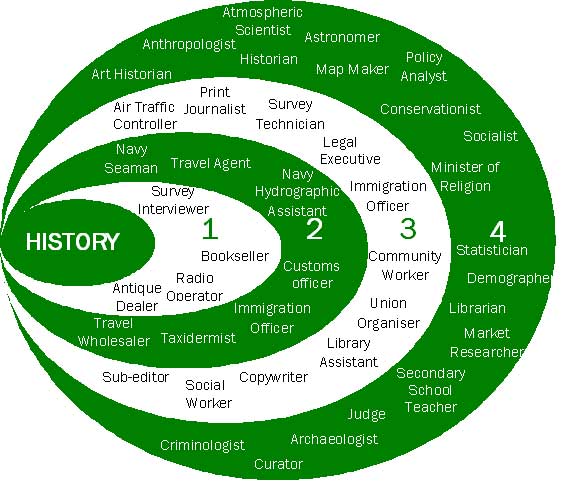
HistoryCareers.jpg

Key to the levels

  1. No specific education, training usually completed on the job
  2. Year 11 (or higher) and part-time study, or on-the-job training.
  3. Year 12 and diploma, certificate, on-the-job training or equivalent
  4. Year 12/13 and degree/post-graduate degree
About our company
Enter a succinct description of your company here
Contact Us
Enter your company contact details here